Powered By Blogger
Showing posts with label Accidents. Show all posts

Tuesday, August 25, 2015

Remembering Two Deceased Great Uncles and Their Air India Connections!

An aircraft has been a real fascination to me right from my childhood. It remains so even now. Becoming a pilot was one of my childhood dreams. Unfortunately, it did not materialize. Sitting by the window seat of a commercial aircraft and viewing the aerial geography still remains as a fascination for me.

In continuation to what I wrote yesterday, I was thinking of writing something more elaborating our problems with good governance.

I changed that idea because a cousin sister of mine reminded me of a long forgotten tragic incident of an air crash  by sending a WhatsApp link to a blog that brought back much details of those things forgotten.

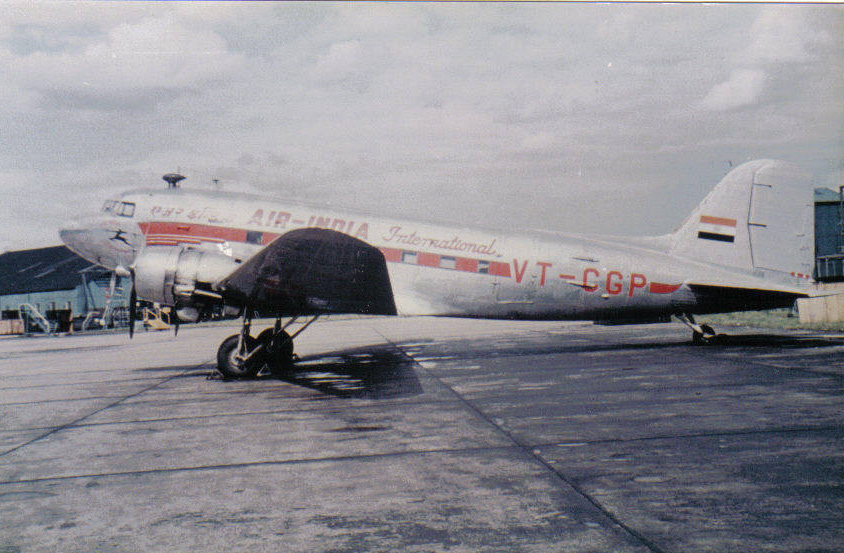
The blog described the details of the long forgotten Air India DC-3 Dakota Plane crash in the Nilgiri mountain ranges of South India that happened in December 1950. That was the first year of existence of the independent Indian Republic!

An Air India DC-3 Dakota Aircraft
Similar to the one which crashed in the Nilgiris in 1950

It was some information I had been seeking since my childhood, but couldn't. My cousin, Saro and the blog writer, Ms.Nina Varghese, deserved to be thanked for the unexpected help in this context. It helped me to brush up some past memories and to know more. Google helped to find another blog that provided some more info.

Now coming to the reasons of my interest in this. There are more than one reasons. Late, Mr.C.Luke, who happened to be last listed passenger of this ill-fated Air India DC-3 Dakota flight was my mother's uncle (husband of my grandmother's younger sister, whom we used to call as Kundara Ammachi.). During my childhood, it was usual for my mother and grandmother to take me with them to their home at Kundara . The photograph of the deceased young head of the family adored the front wall and the handsome face made a long imprint in my young mind. This widowed aunt used to be a qualified nurse who in those days earned a reputation as a trusted registered medical practitioner. I used to enjoy the visits to the Kundara home during those days because of the company I used to get from my mother's cousins who were all only a couple of years elder to me.

Late Mr C.Luke (Source: Family Photo Albums)

Whatever the little I had known about this uncle, Luke, was from my mother, late Mrs.Chinnamma Mathew. From her, I had learnt that this uncle of hers who met his untimely death in the air crash few years before my birth was a promising businessman and entrepreneur. The air mishap had ruined all those business and much of the family's fortunes!

In those days, there was not much of facilities for me to know more about airplanes, the flying machines about which I used to be in my childhood fantasies. In the late Fifties and the Sixties, I remember running after to scan the skies in search to have a glimpse of the aircraft that made much noise from up in the sky, only to be contented with the small silvery image that looked some thing like a small cross and disappeared as fast as it appeared.

As a child I had some rare opportunities to view some small airplanes including an opportunity to sit in the pilots seat inside a small flying club machine kept in the hangar at the small aerodrome of Trivandrum of Nineteen fifties. All these enhanced my curiosity to know more about airplanes and the fellows who flew these marvelous flying machines of modern times.

My fascination with the subject prompted my father, late Shri T.M.Mathew, to reveal a surprising truth to me. It was about his uncle (his mother's younger brother) late, Mr.K.M.Daniel (Kulanjikombil-Kumplampoika).I was much thrilled to learn that this uncle was then a serving pilot of Air India of those days. I remember my father once making a plan to take me to Kochi where he lived in those days and meet this uncle. Somehow this never happened and it remained as a disappointment for me.

A few years later, in the early years of the Nineteen sixties, some unfortunate incidents happened in the glamorous pilot life of my great uncle. He lost his job at the fag end of his flying career. A couple of years later, circumstances and fate played the cruel joke in his life that he became a resident of my own home for about three years.

Dani Appachan, we called him fondly so, became a close companion and an amazing well wisher of mine in those days when I was a high school student. Every night we used to spend hours together discussing about his past experiences first as a high school teacher, then as a World War-2 veteran of the Royal Air Force and later as a commercial pilot of Air India. I used to listen to his world trotting stories with eyes and ears fully opened!

Without actually seeing an big aircraft, I learnt much about those from this pilot uncle and in my fantasies I piloted those wonder machines! While I nursed the fantasies of flying, I also kept the hidden fear of air accidents which were not uncommon in those days. The guidance of my pilot uncle could have helped me to pursue a flying career. But to be honest, the hidden fear of air accidents prevented me from doing so! Perhaps the thoughts about the unfortunate fate of Luke uncle pulled me back!

It was Dani uncle who gave me much information about the unpredictable weather conditions that among various other things caused air accidents. I still remember him explaining how an air craft dropped like a stone when it happened to enter what is known as air pockets, the nightmares of pilots! ( Incidentally I experienced the horror of one my self some time in the Nineteen nineties while on board an Indian Airlines Boeing 720 from New Delhi to Raipur. Sitting by the window, I watched the plane losing height suddenly and then stopping  abruptly causing a few of the luggage doors getting opened to throw some of the luggage out!)


Air travel has improved much and the facilities both at the airports and the commercial air crafts have enhanced even in this country. Air travel is no more considered as a risky proposition! It is much safer than many other modes of transport, thanks to the advancement in technology.

Yet, the pilots deserves to be admired for their skills for smoothly maneuvering those huge machines with the help of some on board instruments and the instructions from the air traffic controllers. The skills and dedication of the air craft maintenance engineers and technicians also need to be honored. Modern air travel is possible due to the coordinated efforts of several people!

Luke uncle and Dani uncle are no more in this world. But they were pioneers of Independent India. 

Like wise we are all destined to fade out from the face of this world.

Do we have some destinies beyond that? 

My curiosity has now shifted to that! Perhaps I would find more information to satisfy my quests!

Friday, July 17, 2015

Case Studies on Some Industrial Accidents: Lessons to be Learnt by Practising Engineers: Part-1

Case Study-1
A Gas Leak Accident that Killed Seven!

This incident happened in a large integrated steel plant in India. In integrated steel plants (ISP) world over, iron ore is first converted to molten iron called hot metal in a chemical process reaction vessel commonly known as the Blast Furnace (BF). ISPs normally have many BFs for producing hot metal all normally working in parallel so that they achieve their targetted production levels. Hot metal production in an ISP is typically to the tune of a few thousands of tonnes per day or a couple of million tonnes per year.

Iron ore is a natural mineral containing oxides of iron and other impurities such as oxides of silicon, manganese, magnesium, calcium, etc. It is nothing but commonly available red soil having the iron content a bit higher for economical extraction of iron. For separating the iron, the iron oxide needs to be melted and reacted with the reducing gas, carbon monoxide freshly produced by the action of oxygen in air with a carbon rich raw material such as carbonized coal commonly known as coke. All these reactions continuously take place in a vertical semi-fluidized bed reaction vessel called the Blast Furnace (For more about the Blast Furnace process of iron making see this wiki article).

Waste process gases emanate from the top of the Blast Furnace, called the BF Gas, which is nothing but the excess air carrying much of the gaseous reaction products such as Carbon monoxide, Carbon di oxide, Hydrogen, etc together with the dust generated during the vigorous exothermal reaction in the furnace. This gas is very hot and contains useful chemical energy due to the presence of Carbon monoxide and Hydrogen. Conventionally, in the ISPs this gas is further cooled and removed of the dust in gas cleaning plants (GCP) for use as a low calorie fuel gas elsewhere in the steel plant. This BF gas is highly toxic because of the presence of Carbon monoxide.

The dust laden BF gas that comes out of a BF is cooled and cleaned in a GCP by spraying water over the gas in closed scrubber vessels. The water used for cleaning the gas entraps the dust present in the gas and becomes a slurry which is then treated in a wastewater treatment plant (WWTP) system. In the WWTP the waste water (effluent lean slurry) is settled for removal of suspended solids, cooled and the clarified water is recycled back for the scrubbing process in the GCP using pumps installed in a pump house.

Blast Furnaces are continuously operating chemical reactors intented for extractive metallurgy. Once it is built and commissioned, it is fully stopped and taken out of production service only for capital repairs. Such capital repairs are done after several years of continuous production. However, minor hot repairs are also carried out periodically by keeping the furnace hot, but without the full fledged production. All repairs are planned with the least shutdown periods, to keep the production losses to the minimum.

A working BF containes several hundreds of molten metal and semi finished raw materials inside its vertical shaft and its bottom belly. This is kept hot and reactive with the action of huge volumes of hot air blast that is is blown inside through the huge bed of raw material stock contained in the furnace shaft through nozzles called tuyeres. The air blast is the most vital process of the blast furnace that is accomplished through large air blowing machines. 

Besides, large quantities of cooling water is continuously required to cool the BF shell. Any failure to supply the air blast or the cooling water can cause serious damage to the BF. If air blast is stopped for some time there is the danger of the molten iron and molten slag getting solidified in the furnance that could cause irrepairable damages. Similarly, stoppage of cooling water can cause the BF shell made of steel plates to melt down. 

ISP operators and management consider BFs as the most critical production facility and ensure all they can to keep the BFs in operation through out is operating life till it is taken out of service for any planned repair period.

A BF plant is a complex conglomerate of many systems, equipment and components, operated and maintained by managers, metallurgists,engineers and technicians who are teamed up in various functional departments and sections. In their anxiety to keep their own systems under top priority, these teams often forget to understand the role of the other supporting  systems and the teams that operate and maintain them. 

Any maintenance to the BF system needs some time of some shut downs to some of the working equipment and systems which may lead to some production loss. Hence, production oriented managements usually keep building the pressure on the various teams to have their maintenance activities completed by taking the least possible time. 

Such pressures often cause some engineers to postpone some maintenance functions which they deem as non-vital to some later maintenance time, only to keep them postponed further in a similar way. Such management pressures also cause some engineers to neglect or by-pass some systems which they consider as irrelevant. Lack of proper understanding of the plant systems by new engineers and teams enhances such risks. This is because the old ISPs have  production facilities with operating life exceeding several decades.

The ISP where the accident occured have been operating six BFs in parallel with many common facilities such as the pump house, the WWTP, the Air Blower Station, etc. There were independent GCP facilities for each of the six BFs, but the waste water treatment facility and the pump house that circulated the water were common to all. There existed one group of pumps that recycled clarified water from the WWTP to the individual GCPs through a common header pipeline. These pumps were located in a common pump house which was located sufficiently away from the BFs and their GCPs. The pumps were located in the dry-well of the pump house which was a few meters below the general ground level.

There were three pumps in this group and normally two were kept in operation and one was kept as a standby. Each of the pump discharge pipes connected to a common collector pipe kept at the pump floor, through their own isolation valves and non-return valves. A common pipeline connected to the common collector pipe distributed the clarified water to all the six GCP scrubbers. Individual branch pipelines supplied water to the scrubbers where the water used to be sprayed to the hot BF gases for cooling and cleaning through various kinds of nozzle systems. The piping system had several motor operated and manual valves for controlling and isolating the water supplies to the GCP systems as per requirement.

The GCP scrubbers were the process equipment where the BF gas and the water interacted. As the water had to spray over the gas, the water pressure was kept much higher than the gas pressure.

Several departments worked to keep the BF production and maintenance operations to go on uninterrupted. There were the BF department with their own sections responsible for the mechanical maintenance, electrical maintenance, instrumentation maintenance and other supporting departments such a the Energy Management Department responsible for the GCPs and the Water Management Department responsible for the pump house, the WWTP and the main water supply pipelines. The staff and engineers of all departments worked in shifts on a 24x7 basis.

Some operating personnel of the Water Management Department had been aware of a minor leak in the common collector pipe located in the main pump house to which the three GCP supply pumps were connected, for some time. The leak had happened in the lower side of this fairly large pipe with a diameter of about 900 mm. This pipe piece was supported on the floor of the pump house and there was hardly any space between the pipe bottom side and the floor. This restrained the operators and the shift managers to assess the real condition of the pipe. While the pipe was quite okay on the top side, there was some corrosion at the bottom side and there was some pin-holes from which water had been leaking.

In the last several decades, this pipe piece was never replaced during any maintenance and the concerned department knew about its old age and probable deterioration due to ageing and corrosion. The pipe bottom was specially vulnerable to external corrosion as this side was difficult to be painted due to the small working clearance. Besides, this side was exposed to water accumulations in the pump house floor that happened occassionally due to various reasons. This also was one of the reasons for the probable external bottom side corrosion of the pipe.

For replacing this pipe piece, the Water Management Department needed to take a shut down to the GCP water supply main header pipe which invariably affected the production from six BFs. The production managers over the years had developed a type of technical  superiority in all decision making due to which it was difficult for the Water Management Department to convince the top authorities about the necessity for a production shut down for replacing a small length of old water pipe. The engineers of the Water Management Department had developed a submissive attitude over the years which prevented them to talk authoritatively about their technical requirements and convince the top authorities of the steel plant. They had almost developed a withdrawn attitude towards their professional vigilance  to  critically study the various kinds of risks involved in their functions!

The inter departmental meetings, for quite some time, had been stressed towards achieving production targets and better production performances with attention towards removing bottlenecks. Perspective assessments and critical analysis of risk scenarios had undergone a decline.

This caused the top officials of the Water Management Department taking temporary actions for rectifying the leak, instead of reporting the issue to higher management authorities with a proper risk assessment study to convince the authorities for an immediate shut down of the BF-GCP systems for taking up the work of replacing the leaking old water pipe. The temporary leak plugging acts done by the department by welding etc further aggravated the condition of the leaking pipe.

And within another couple of days, in one shift, all of a sudden the pipe ruptured. Water splashed out from the rupture and the GCP water supply pressure dropped. The shift personnel of the water management department informed their seniors and the matter got communicated to all the other concerned engineers and managers of  the Energy Management Department and the BF Department. The heavy leakage of water from the ruptured pipe was now flooding the pump house and the pumps had to be stopped to prevent flooding. Those concerned officers, engineers and operating people of the steel plant rushed to the pump house to physically assess the rupture in the collector pipe.

But without them ever realizing, a major tragedy was about to happen shortly. As the water pressure in the GCP water supply pipe decreased due to the rupture and the subsequent pump stoppage, the water in the pipe line began to drain out through the rupture as the rupture point was the lowest point. Soon the water in the supply main got emptied and the toxic BF gas began to fill the water pipe from the scrubbers and began to leak out through the pipe rupture in the pump house.

Carbon monoxide is an odorless gas and a swift acting toxin. The pump house is a closed enclosure and the toxic gas was getting mixed with the air in the pump house. This posed a two fold danger. First the pump house became a toxic gas chamber. Any one who inhaled now got affected by carbon monoxide with imminent lose of consiousness and possible death. Secondly, the pump house was getting an explosive mixture of fuel gas. Certain low concentrations of monoxide gas with air is highly exlosive and it could explode like a bomb causing major damage with a minor spark any where!

The people who rushed to the pump house now was getting affected by the toxic gas and they were simply falling down unconscious. It took others who followed those went earlier down to the pump house some time to realize what was happening. And when they realized it, a number of persons were already affected. Fortunately, the rest of the engineers realized what was happening and they could take immediate preventive measure that could save the pump house from exploding!

Several people got affected and about seven lost their lives due to gas poisoning. It took the steel plant a few days to restore normal production! What production they obtained earlier by post poning a planned shut down all wiped out now due to this accident.Perhaps the loss was much more including precious lives of people!

A series of enquiries followed. Some by the statutory authorities, some by techincal empowered groups of the company. All enquiry committees and commissions brought out their own findings and suggestions. While the technical cause was pin-pointed, the committees apparently failed to recognize the root cause of the problem- the cumulative effect of  technical management errors that had been happening for a long period!

I will now discuss some of these errors that keep happening in Indian process industries which most of the Indian engineers assigned with the task of factory management routinely seem to ignore or do not consider as some thing important to be addressed properly:

1. Indian engineers are not very much comfortable with the concept of unit wise operation of multiple process units and systems. If there are more than one process equipment or system for achieving higher production, the Indian engineers quite often force the plant suppliers and designers to interconnect those systems for higher flexibility of operation and maintenance. For example, it was much safer in the above mentioned case to operate and maintain each of the BF systems as  self contained individual systems instead of an interconnected system of six BFs. The interconnections enhance system complexity for engineers to understand and comprehend causing new comers be confused about all the functions of the plant systems. This causes neglect of some parts of equipment and systems, especially those that are to be operated only during exigencies! Whenever, a plant accident or breakdown take place, the subsequent actions would be to have more interconnections and more stand by units which enhance the system complexity rather than reducing it in actual practice. 

2. Indians quite often are not very comfortable with record keeping. They seldom make efforts to keep all technical drawings concerned with the plant process and systems. Even if such drawings and documents are available, hardly any effort is made to ensure that all concerned engineers study those drawings and documents carefully and comprehend those fully.

3. Design engineers and plant operation and maintenance engineers work in isolated pockets. They are seldom encouraged to understand the philosophies and technicalities involved in each others' area of work. This often causes erroneous assumptions and subsequent errors. For example, in the case discussed above, the original design engineers had provided certain provisions of water sealing and siphoning arresters in the pipelines that prevented any gas to escape through the water lines when water got emptied in the pipelines under rare situations as had happened. But many such systems got removed or erroneously fixed in later years as the concerned maintenance engineers did not understand their functions or principles of operations.

4. The steel plant management had adopted a system of inter departmental transfers of engineers without ensuring availability of experience and competence of engineers and technicians with regard to their own area of work. This had caused experience vacuums in many areas with the teams handicapped with understanding of technical issues and technical communications. In some cases, the junior engineer felt difficulty to communicate a problem to his senior as the senior had less experience in the field and vice versa. In the case discussed, such a situation had caused the concerned people to foresee the problem in advance. Had there been the required experience and competence at all levels, this problem would have never got escalated to a major mishap like what had happened.

5. Of late, the Indian managements of technical facilities are more and more becoming non technical in attitude and nature with the top managements losing their capacities to understand the complexities involved in technical works. As finance, marketting and other non technical fields are becoming more and more important at the board levels of decision making, the voices of technocrats in companies are getting diluted and they no more get any chance to make the non technical board members to understand the technical problems. This causes the top technocrats to either discard their technical thinking and behave like non technical persons. They in turn discourage technical issues to be discussed at top levels. Real technical and engineering problems now get reduced to lower level issues. This seriously enhances the technical risk levels of Indian process plants. This attitude then percolates downwards and adversely affect the technical thought processes of all engineers working in Indian factories and process plants. Indian engineers working in processing facilities of companies now seldom get any reward for proactive or creative professional thinking. On the other hand, erroneous technical conclusions and erroneous punishments to engineers are on the rise now in India making professional engineering and technical work something not preferred by brilliant engineers.

I hope eminent engineers from India would open up their minds to express their thoughts and comments on the above.

Tuesday, May 26, 2015

Jesus' Teachings About Earthly Accidents of Time: A True Superhuman Narration From the Urantia Book!

The following passage is directly quoted from Paper-166  of the Urantia Book under Part-IV, which deals with life and teachings of Jesus Christ on earth. The authors of this part of the book are stated as the Midwayer Commission, comprising of a divinely authorized group of invisible immortal beings whom the various other invisible authors of the book introduce to us as the midwayers of earth. Midwayers are a group of beings who exist in a realm of existence above human beings but below various other orders of higher order immortal beings.Midwayers are capable of doing things that humans do in the material realm and much more. As they have been in existence on earth for thousands of years, they are said to have direct knowledge about most of the history of earth and its civilizational progress. They understand the languages and the knowledge that humans gained so far and are direct watchers of human progress on earth. They assist superior divine beings in accordance with the universal administrative plans of God. For more details about them read this blog. They got the divine approval to re-state the life and teachings of Jesus which got included as part-4 of the Urantia Book as the divine administration of the universe felt the gross errors that crept in the various writings that the human authors of the past had created, including the four gospels included in the New Testament Bible of the Christians. Incidentally, Part-4 of the Urantia Book is the most appealing and exhaustive literary work that is so meticulous and matter of fact in its details in describing the life and teachings of Jesus on earth. For any unbiased reader, Part-4 provides logical answers to many unanswered questions that they likely had in their minds.

Human beings are perplexed by natural calamities, accidents, war, acts of terrorism, political mismanagement, diseases, etc which often affect thousands of innorcents severely and fatally while several others find miraculous escapes. Some of the intellectuals keep thinking to find the logic behind it. The debate then proceeds further to the irrationality of believing in God or even the rationality of it. A friend of mine sends me this link where this question is inconclusively dealt by Daniel Burke, CNN Religion editor, after he escaped quite miraculously from the Amtrak train 188 crash in the USA.

Unfortunately, this is difficult for us to understand when we visualize the universe organization purely from our materialistic view point. But divine plans transcend materialistic realms, not just as a concept, but as a reality. That is what the Urantia Book reveals with its seamless effort of unifying all those religious beliefs sans their erroneous teachings deviating from facts that are not easy for humans to prove with their limited comprehension.

The following Urantia Book narration reproduces the efforts made by Jesus Christ to remove certain misunderstandings that the common folks of his time, like his immediate followers, nurtured in their minds. Notice carefully the answer that Jesus provided  with regard to the common accidents and natural disasters that keep happening on earth ( this is partly given in the Bible too):

While most Palestinians ate only two meals a day, it was the custom of Jesus and the apostles, when on a journey, to pause at midday for rest and refreshment. 


And it was at such a noontide stop on the way to Philadelphia that Thomas (one disciple of Jesus) asked Jesus: 

“Master, from hearing your remarks as we journeyed this morning, I would like to inquire whether spiritual beings are concerned in the production of strange and extraordinary events in the material world and, further, to ask whether the angels and other spirit beings are able to prevent accidents.”

In answer to Thomas’s inquiry, Jesus said:

“Have I been so long with you, and yet you continue to ask me such questions? Have you failed to observe how the Son of Man (the phrase Jesus often used to address himself) lives as one with you and consistently refuses to employ the forces of heaven for his personal sustenance? Do we not all live by the same means whereby all men exist? Do you see the power of the spiritual world manifested in the material life of this world, save for the revelation of the Father and the sometime healing of his afflicted children?

“All too long have your fathers believed that prosperity was the token of divine approval; that adversity was the proof of God’s displeasure. I declare that such beliefs are superstitions. Do you not observe that far greater numbers of the poor joyfully receive the gospel and immediately enter the kingdom? If riches evidence divine favor, why do the rich so many times refuse to believe this good news from heaven?

 “The Father (God) causes his rain to fall on the just and the unjust; the sun likewise shines on the righteous and the unrighteous. You know about those Galileans whose blood Pilate mingled with the sacrifices, but I tell you these Galileans were not in any manner sinners above all their fellows just because this happened to them. You also know about the eighteen men upon whom the tower of Siloam fell, killing them. Think not that these men who were thus destroyed were offenders above all their brethren in Jerusalem. These folks were simply innocent victims of one of the accidents of time.

 “There are three groups of events which may occur in your lives:
“1. You may share in those normal happenings which are a part of the life you and your fellows live on the face of the earth.
“2. You may chance to fall victim to one of the accidents of nature, one of the mischances of men, knowing full well that such occurrences are in no way prearranged or otherwise produced by the spiritual forces of the realm.
“3. You may reap the harvest of your direct efforts to comply with the natural laws governing the world.

 “There was a certain man who planted a fig tree in his yard, and when he had many times sought fruit thereon and found none, he called the vinedressers before him and said: `Here have I come these three seasons looking for fruit on this fig tree and have found none. Cut down this barren tree; why should it encumber the ground?’ But the head gardener answered his master: `Let it alone for one more year so that I may dig around it and put on fertilizer, and then, next year, if it bears no fruit, it shall be cut down.’ And when they had thus complied with the laws of fruitfulness, since the tree was living and good, they were rewarded with an abundant yield.

 In the matter of sickness and health, you should know that these bodily states are the result of material causes; health is not the smile of heaven, neither is affliction the frown of God.

“The Father’s human children have equal capacity for the reception of material blessings; therefore does he bestow things physical upon the children of men without discrimination. When it comes to the bestowal of spiritual gifts, the Father is limited by man’s capacity for receiving these divine endowments. Although the Father is no respecter of persons, in the bestowal of spiritual gifts he is limited by man’s faith and by his willingness always to abide by the Father’s will.”

As they journeyed on toward Philadelphia, Jesus continued to teach them and to answer their questions having to do with accidents, sickness, and miracles, but they were not able fully to comprehend this instruction. 

One hour of teaching will not wholly change the beliefs of a lifetime, and so Jesus found it necessary to reiterate his message, to tell again and again that which he wished them to understand; and even then they failed to grasp the meaning of his earth mission until after his death and resurrection.

The above passage may not satisfy most human beings. Even the disciples of Jesus could not understand what Jesus explained. The situation has not changed much with regard to humans. It is important to understand the universal plan of progress of intelligent life comprising of both material and spiritual realms.